My ScholarShop
Redesigning a scholarship-powered marketplace to simplify educational purchases for families managing multiple students, funding programs, and complex purchasing rules.
OVERVIEW
Designing a marketplace that balances user needs with complex funding rules
My ScholarShop is the online marketplace within Step Up For Students, a Florida-based nonprofit organization that administers educational scholarship programs for K–12 students.
Families use scholarship funds to purchase approved educational products, curriculum, and learning materials directly through the platform. While the experience resembles a traditional e-commerce marketplace, every purchase must comply with scholarship eligibility rules, available funding, and program-specific requirements.
As the Product Designer on the project, I led the end-to-end redesign of the marketplace, collaborating closely with product, engineering, client stakeholders, and the design team to simplify a highly complex purchasing experience while balancing user needs, business goals, and technical constraints.
PROBLEM & CONTEXT
Managing purchases across multiple students created unnecessary complexity
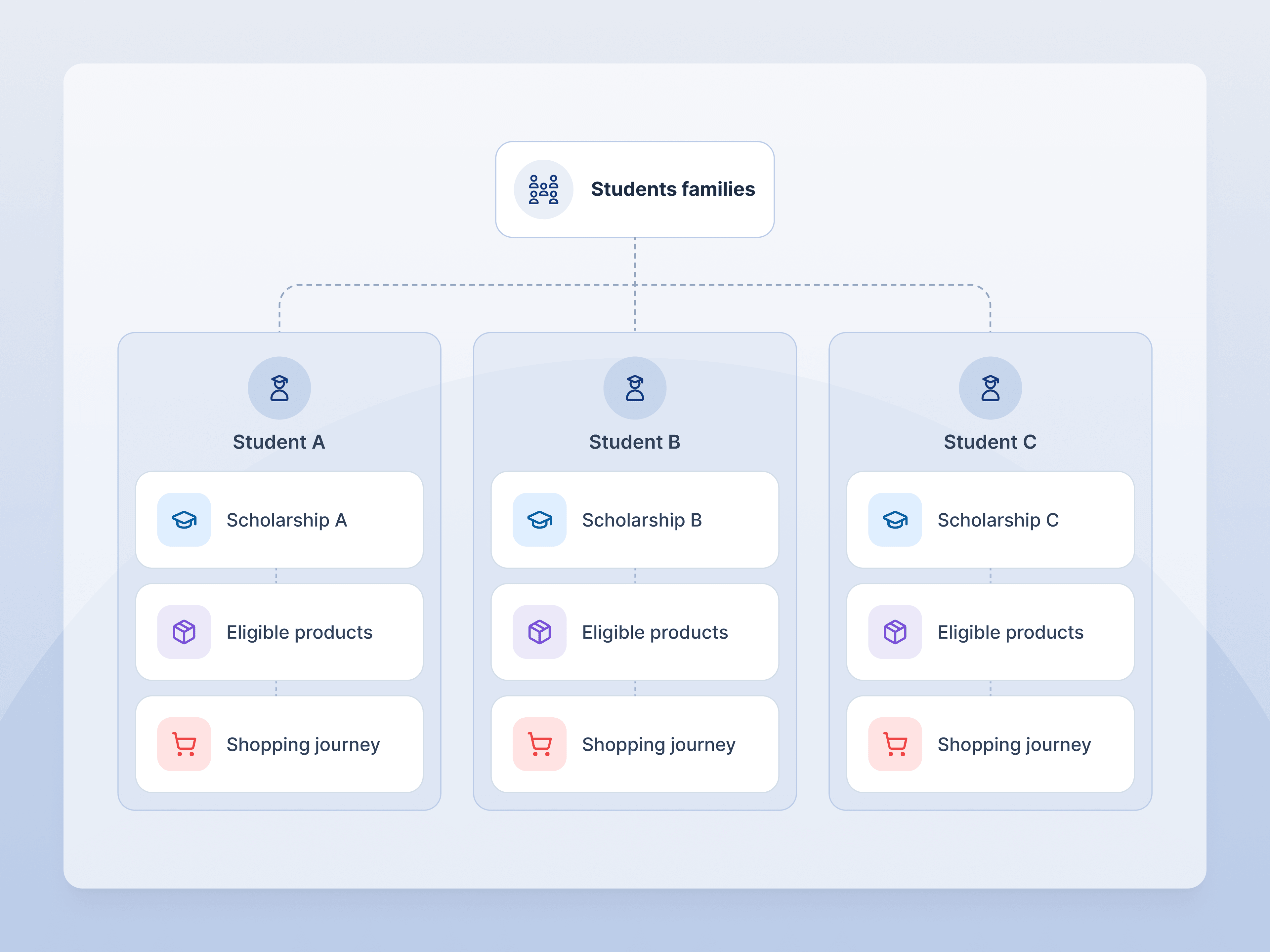
Families often manage scholarships for multiple students, each with different funding programs, eligibility rules, and available balances.
The purchasing experience was structured around scholarship rules rather than how families naturally shop. Parents were required to complete a separate purchasing flow for every student, repeating the entire process from browsing products to checkout.
As a result, educational purchases became repetitive and fragmented, increasing effort and making an otherwise familiar e-commerce experience unnecessarily complex.
RESEARCH & INSIGHTS
Understanding how families navigate educational purchases
User interviews provided valuable insights into how families navigated the scholarship purchasing process, revealing recurring pain points and unmet needs.
Building on these insights, I synthesized research findings to identify the underlying causes of friction and uncover opportunities for improvement.
Research methods & tools
Key findings
- Families shop for the household, not one student at a time.
- Scholarship rules and funding availability shape purchasing decisions.
- Families need visibility into available funds throughout the journey.
- Product eligibility should be clear before checkout.
APPROACH
Turning insights into product decisions
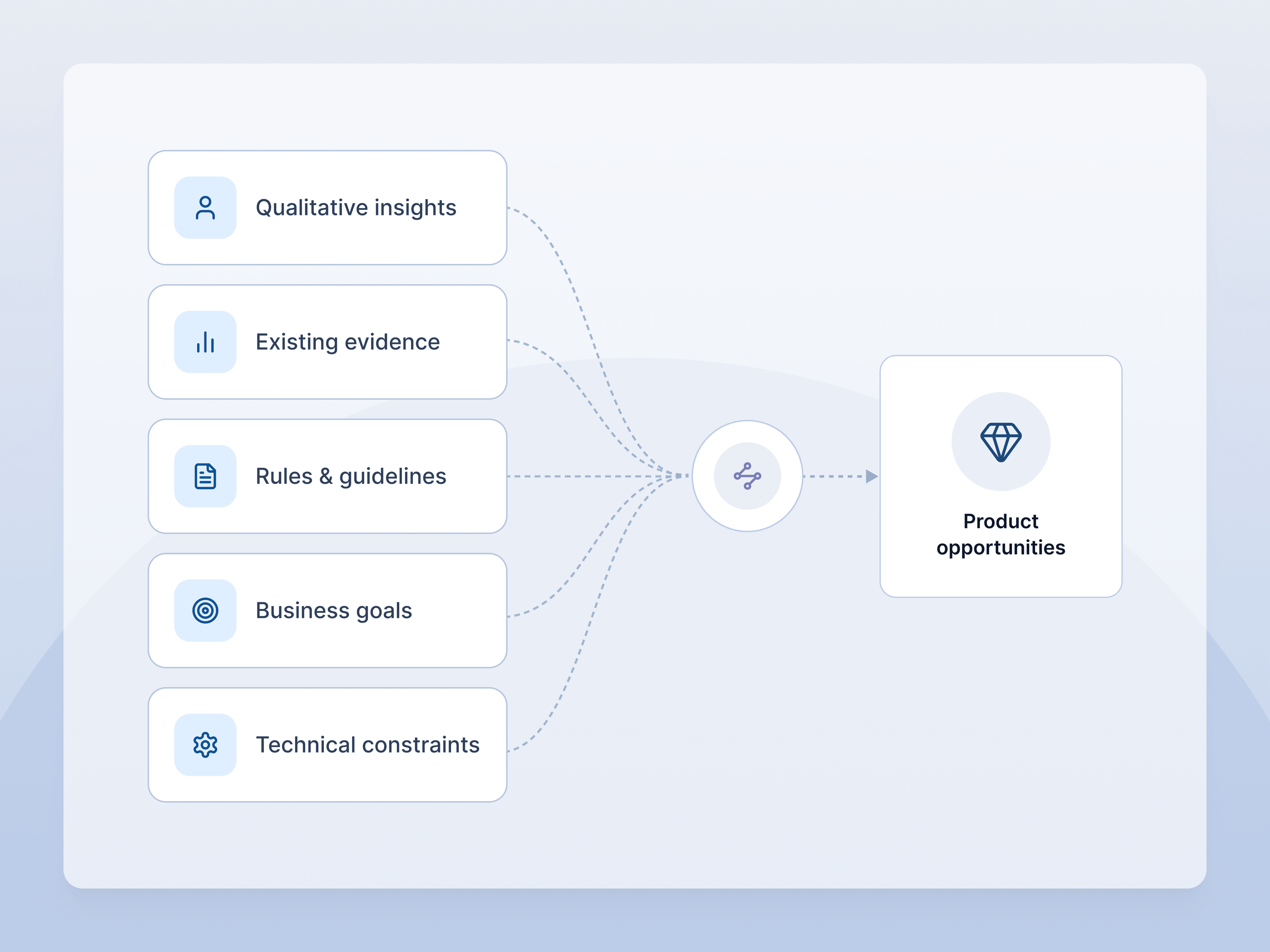
Synthesized insights
Transforming qualitative insights and existing evidence into clear product opportunities and priorities.
Balanced priorities
Balancing user needs alongside scholarship rules, business goals, and technical constraints to guide product decisions.
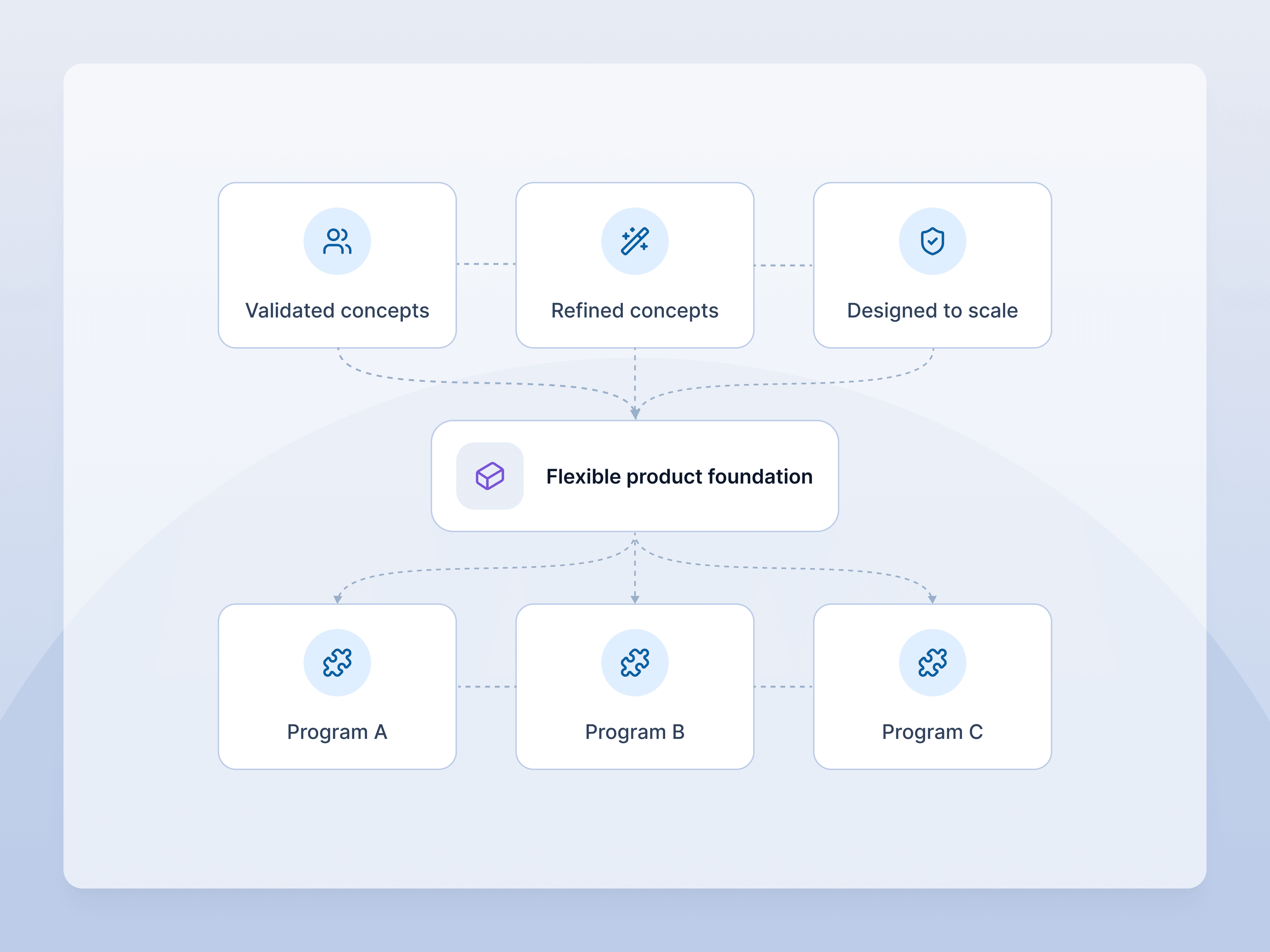
Validated concepts
Collaborating with stakeholders through workshops and iterative exploration to refine concepts before detailed design.
Designed to scale
Designing flexible solutions that could support multiple scholarship programs, evolving business rules, and future product growth.
SOLUTION
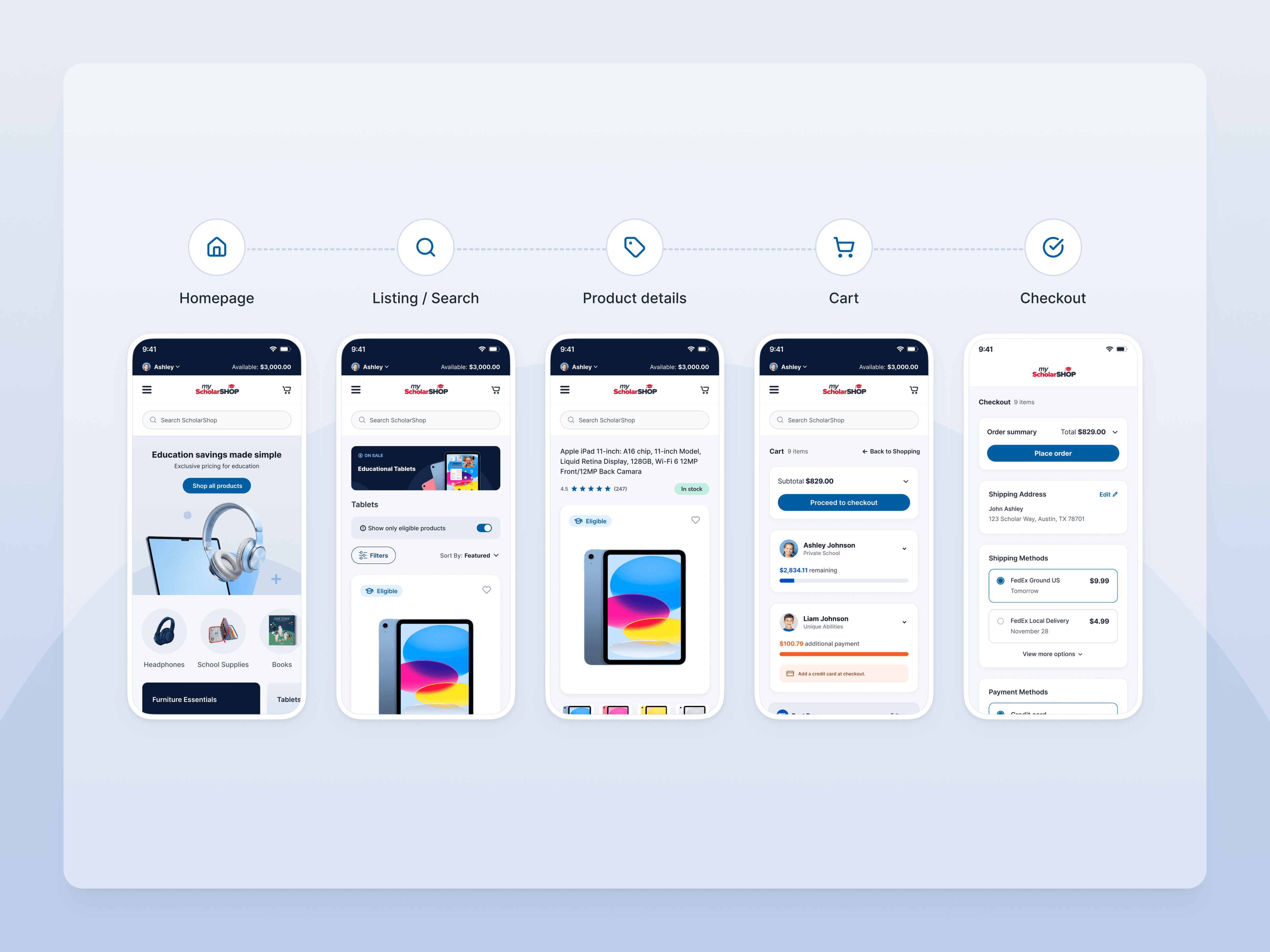
Unified purchasing experience
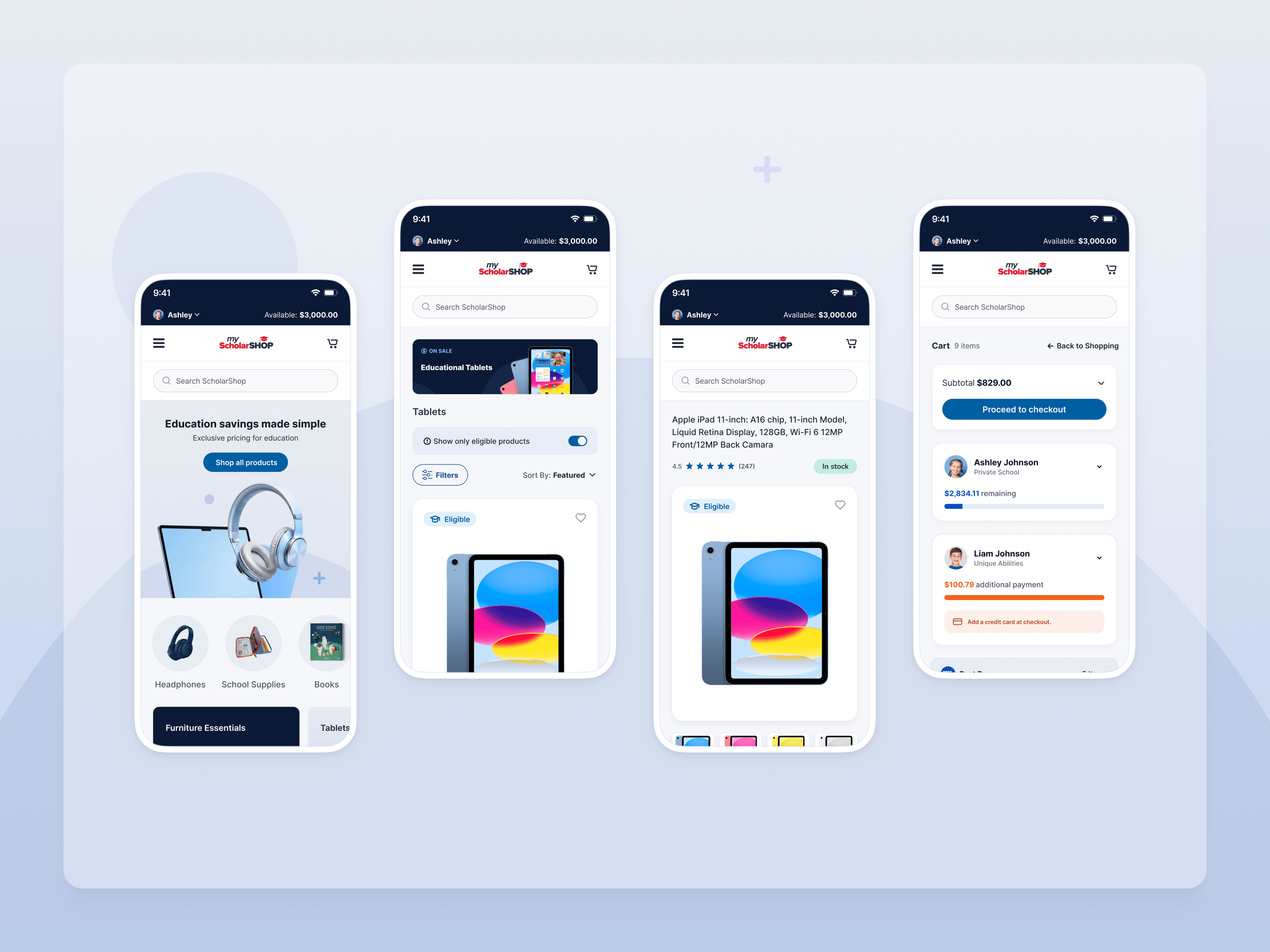
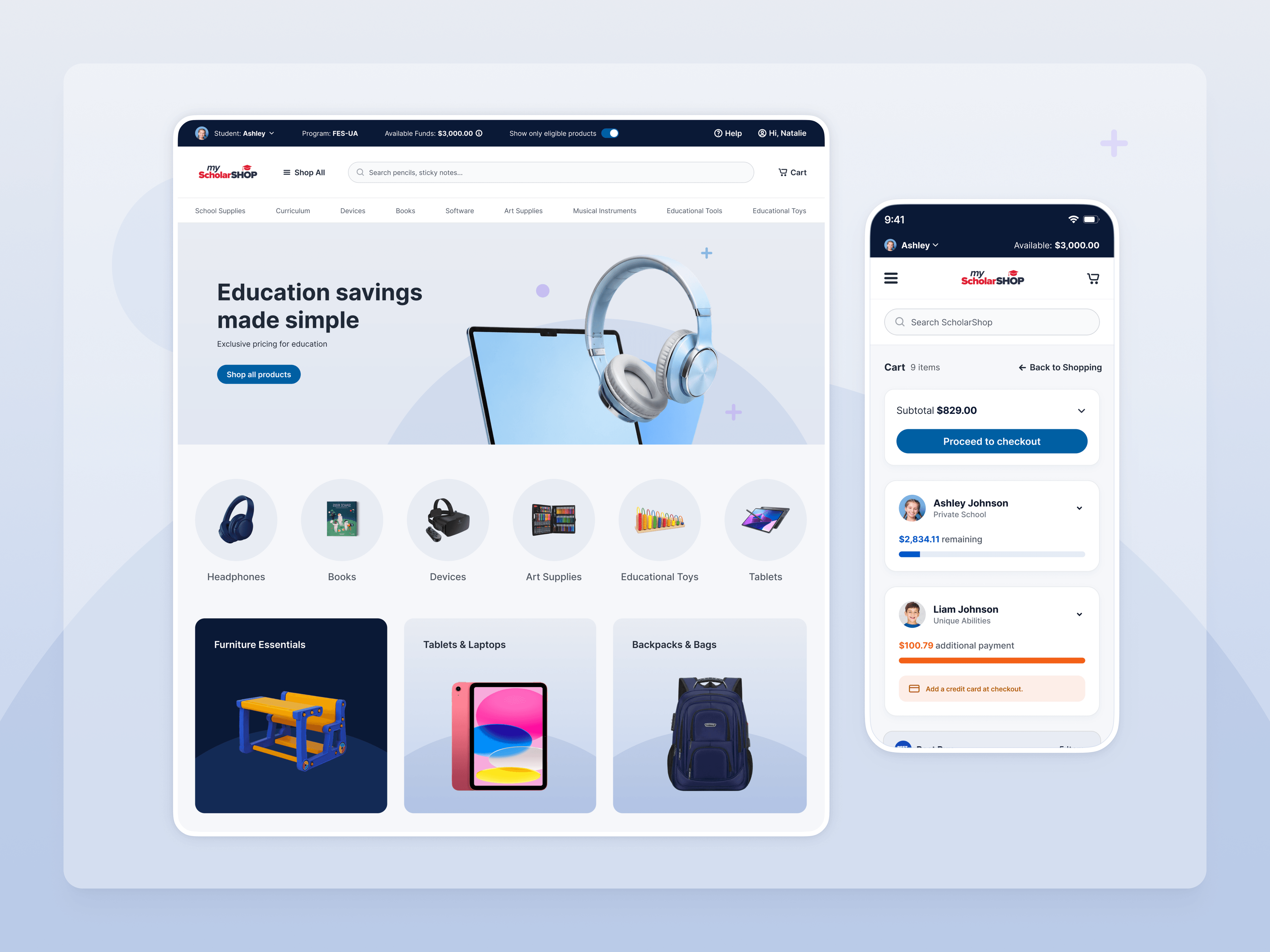
I redesigned the purchasing experience around how families naturally shop, allowing parents to manage multiple students within a single journey while keeping scholarship context visible throughout the experience. The result was a simpler, more intuitive flow that reduced repetition without compromising business rules or program requirements.
DESIGN DECISIONS
Design decisions behind the redesign
Every design decision was guided by research insights, user needs, and business constraints to create a more intuitive purchasing experience.
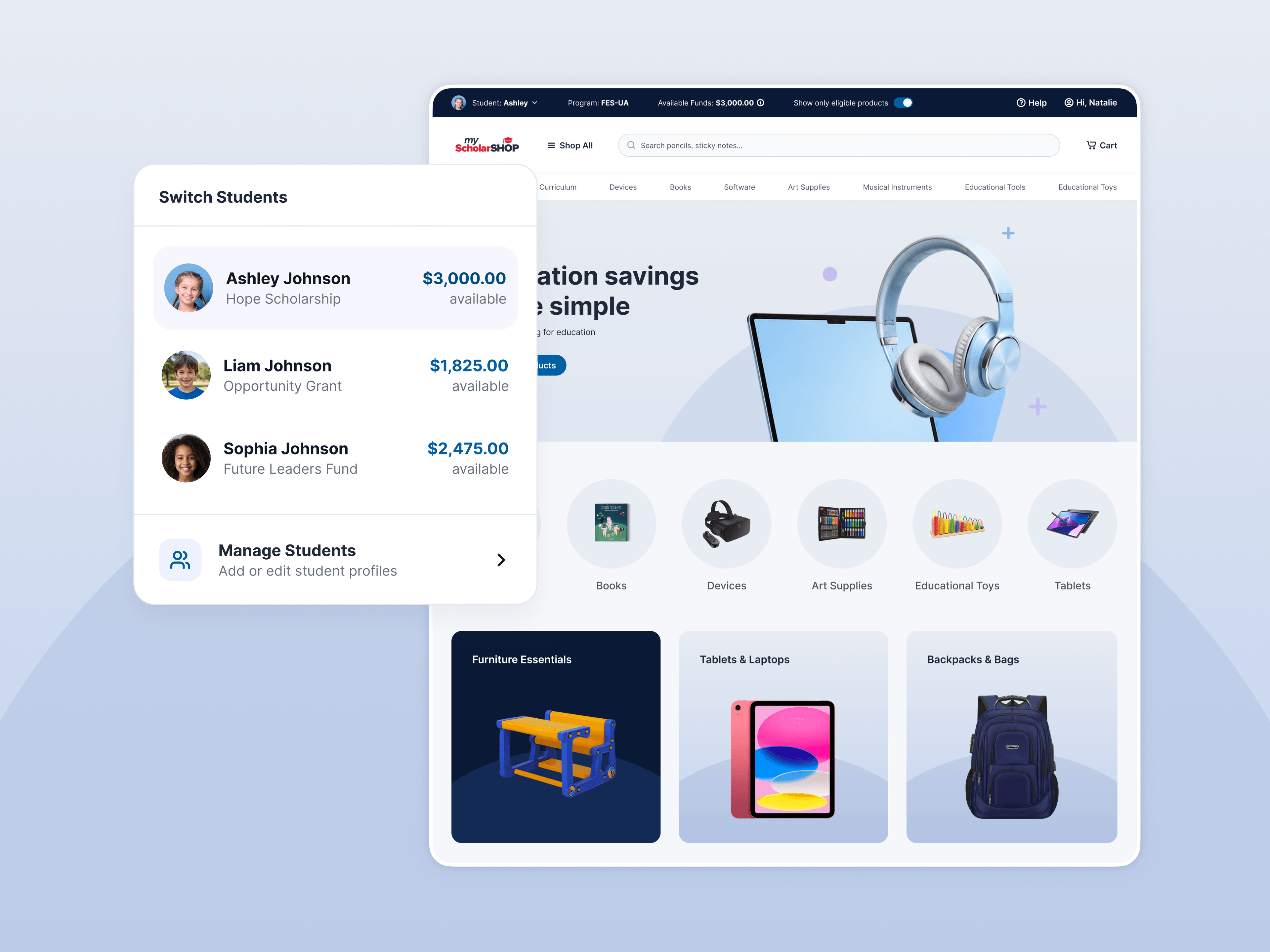
Making student switching part of the shopping experience
Research revealed that families often managed scholarships for multiple students, yet the purchasing experience required them to complete an entirely separate shopping journey for each student. Every switch meant restarting the process from browsing products through checkout, creating unnecessary repetition and effort.
Rather than treating student selection as a one-time setup step, the redesigned experience integrated student switching directly into the shopping journey. Families could seamlessly move between students while remaining in the same session, allowing the experience to adapt products and scholarship context without interrupting the purchasing flow.
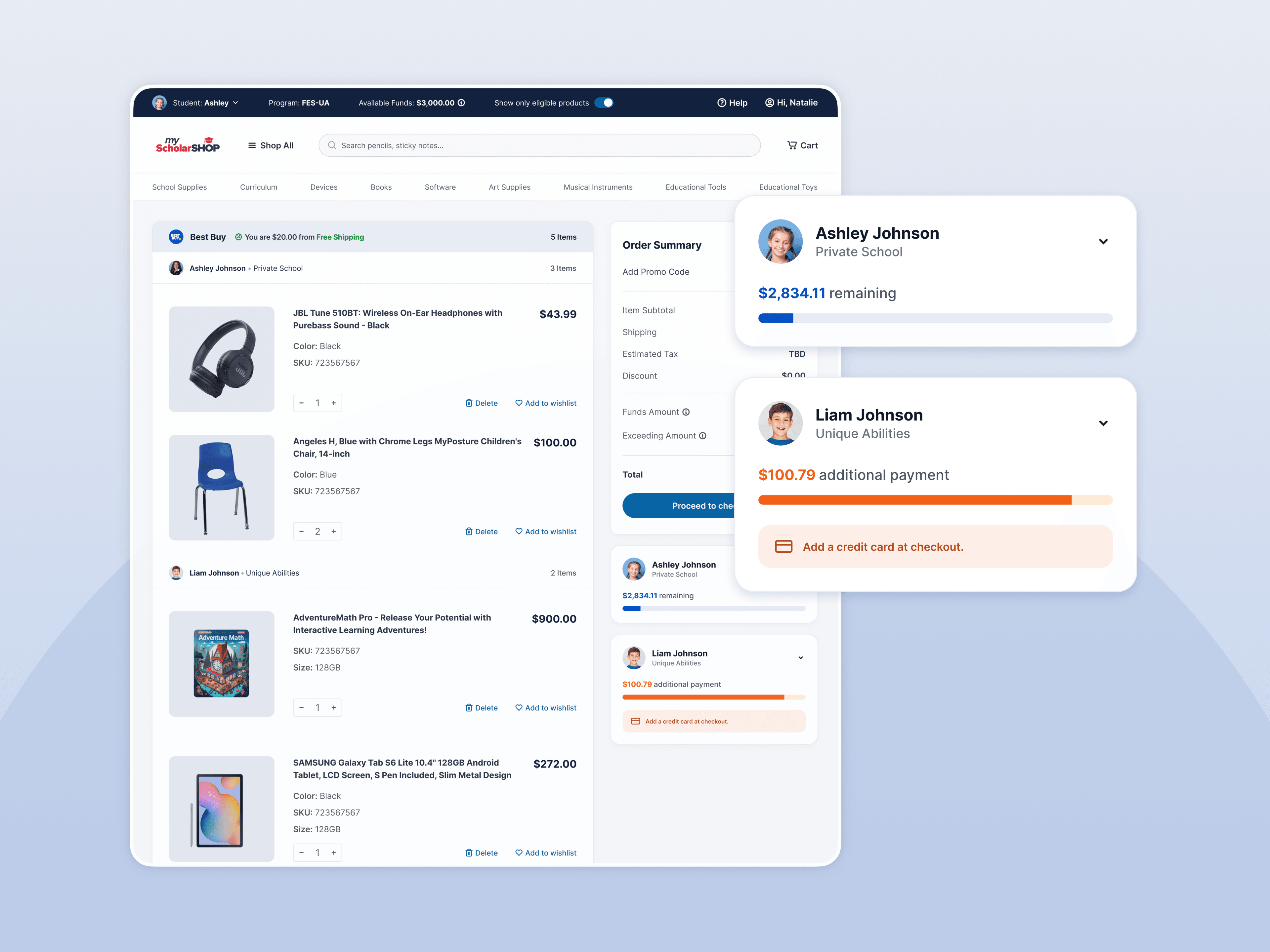
Maintaining student and funding context throughout the shopping journey
Families made purchasing decisions on behalf of specific students, each with different scholarship programs and available funding. In the previous experience, this context was established before entering the marketplace but quickly disappeared once shopping began.
The redesigned experience kept student identity, scholarship program, and funding information persistently visible throughout the journey. By continuously reinforcing this context, families could make informed purchasing decisions without needing to remember scholarship details or navigate back to previous steps.
Balancing marketplace growth with eligibility transparency
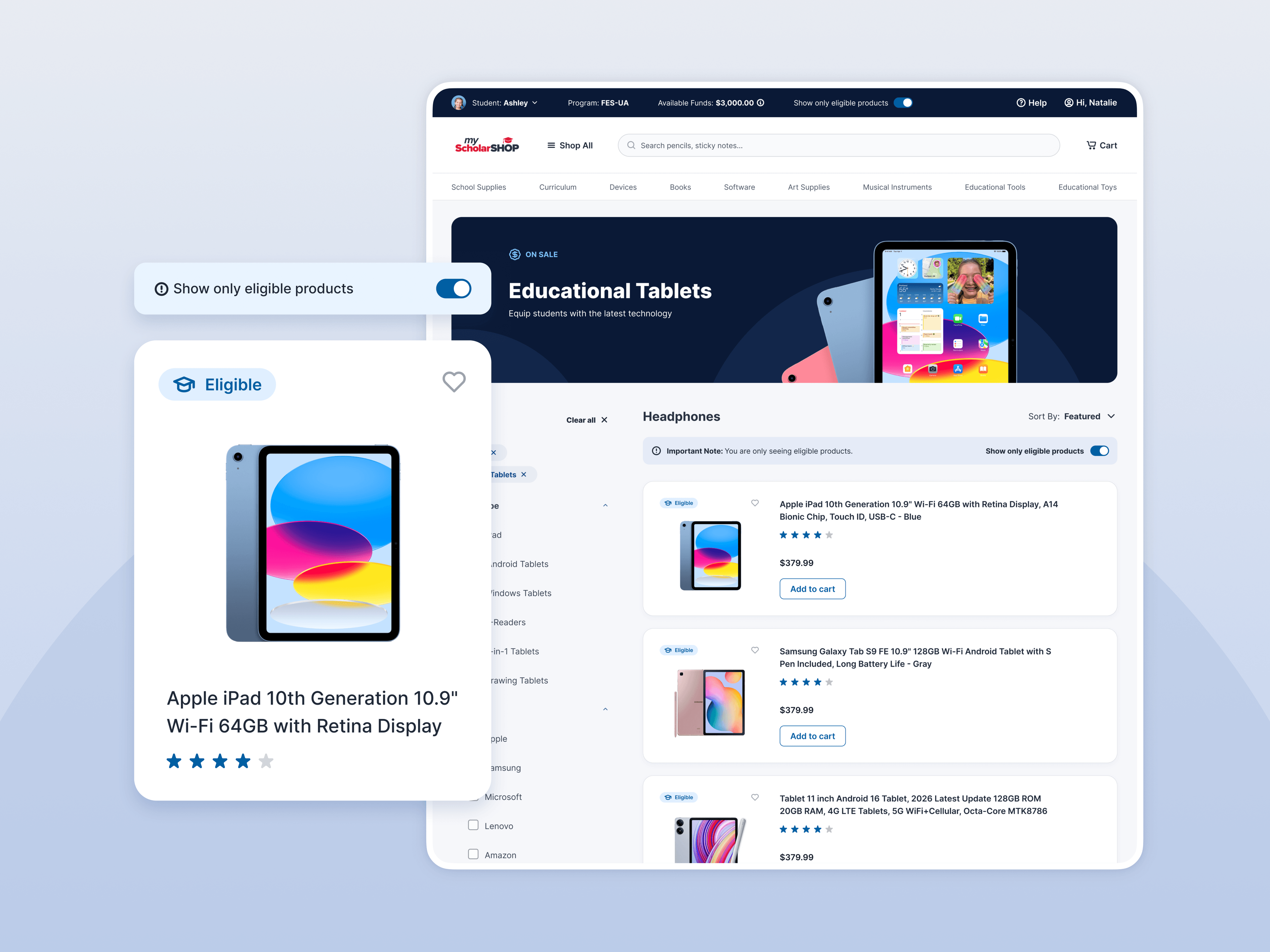
Expanding the marketplace meant introducing products beyond those covered by scholarship programs. However, doing so risked creating uncertainty about which products could be purchased with scholarship funds.
Rather than hiding ineligible products, the redesigned experience made product eligibility explicit through contextual indicators across the shopping journey. This allowed the marketplace to expand its catalog while helping families clearly distinguish scholarship-funded purchases from out-of-pocket spending.
RESULTS & IMPACT
Simplifying Scholarship-Funded Purchases
Post-launch user feedback indicated that the redesigned experience felt easier to navigate. Parents particularly appreciated being able to switch between students seamlessly and having funding information readily available throughout the purchasing journey.
Parents could manage purchases for multiple students within a single shopping journey, eliminating repetitive navigation and creating a purchasing experience that better reflected how families naturally shop.
The new purchasing model supported the expansion of the marketplace by introducing clear scholarship eligibility guidance directly into the interface, enabling broader product offerings without adding complexity for families.
FINAL THOUGHTS
Balancing competing priorities
One of the biggest takeaways from this project was that product design often means navigating competing priorities rather than optimizing for a single outcome. Simplifying the purchasing experience required understanding how user behavior, scholarship policies, and business goals influenced one another, leading to a solution that balanced the needs of families with long-term product goals.